
Quick Answer
Most pillows should be replaced every 1 to 2 years. Replace yours sooner if it feels flat or lumpy, has lasting stains or odor, no longer supports your head and neck, or stays collapsed after use.
Why Pillows Wear Out
A pillow absorbs moisture, body oils, pressure, and daily wear. Even with a pillowcase, buildup can eventually reach the pillow itself. At the same time, fiber can flatten or clump, foam can lose its shape, and feathers or down can become uneven.
A worn pillow is not automatically dangerous, but it can become less clean, supportive, and comfortable.
Five Signs It Is Time for a New Pillow
1. It feels flat or lumpy
Permanent flat spots, hard lumps, or uneven filling mean the pillow may no longer support your head and neck properly.
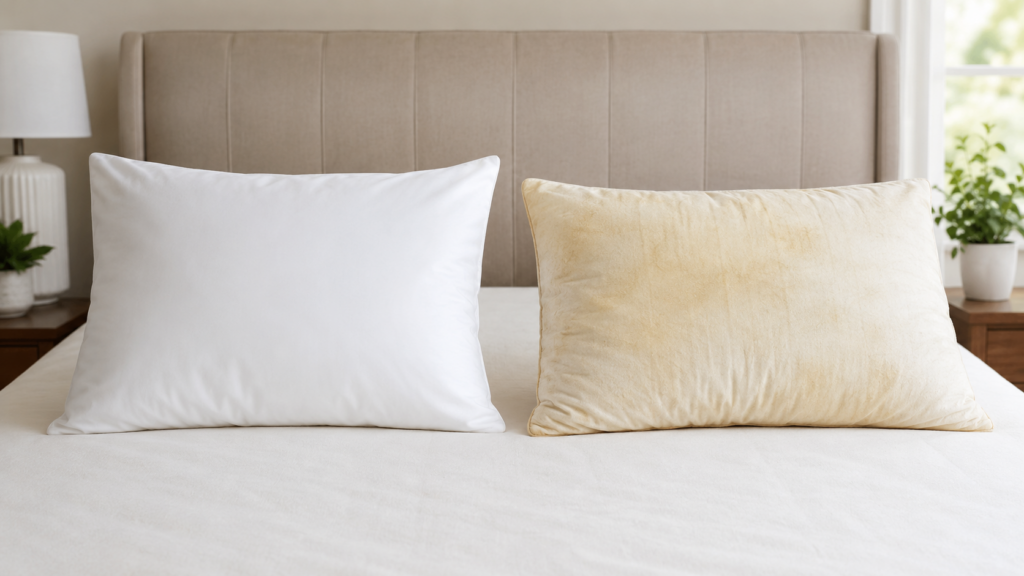
2. It has heavy yellow stains
Yellowing commonly comes from sweat, body oils, saliva, and moisture. If heavy discoloration remains after proper cleaning, replacement may be the better choice.
3. It still smells after cleaning
Persistent odor can indicate that moisture and buildup have settled deeper into the pillow.
4. It does not bounce back
Fold or press the pillow. If it stays collapsed or misshapen, the fill is likely worn out.
5. You sleep better with another pillow
A pillow is not the only possible cause of neck or shoulder discomfort, but a noticeable improvement with a different pillow is useful evidence.
How Long Different Pillow Types Last
Polyester and basic fiberfill often flatten sooner. Memory foam can last longer when it retains its shape. Latex is generally durable. Down and feather pillows may last longer with careful cleaning and regular inspection.
Judge a pillow by its condition, not just its age. If it remains clean, supportive, and odor-free, it may still be usable. If it looks and feels worn out, the calendar matters less.
Continue the Pillow-Care Series
MyCleanPillow provides general educational information, not medical advice.
Ready to Compare Your Options?
Looking for a new pillow? See our research-based comparison of pillows for different sleep positions, materials, and comfort preferences.