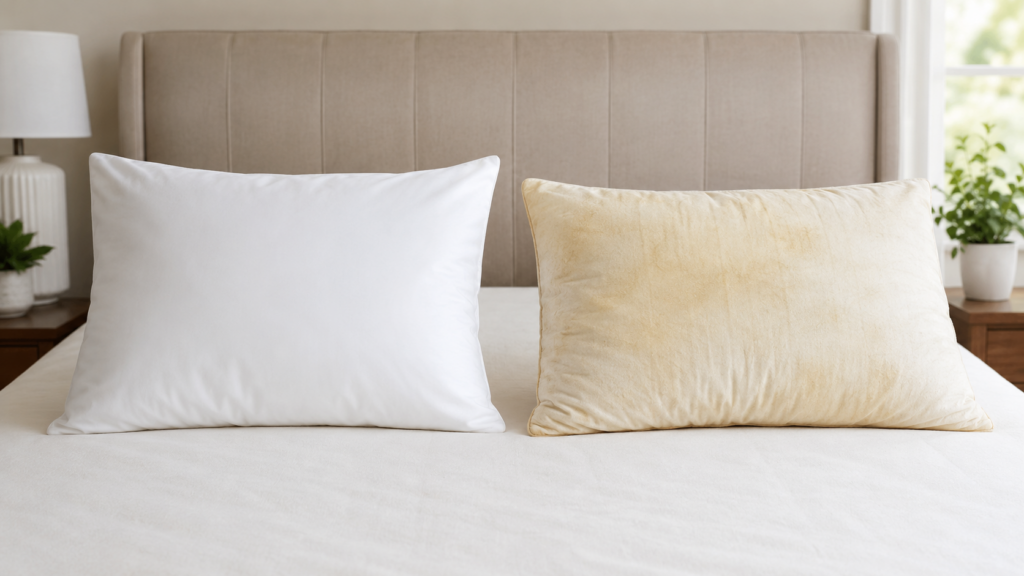
If allergies or asthma affect you, pillow hygiene deserves extra attention. The goal is not to fear your pillow, but to reduce avoidable buildup and recognize when cleaning is no longer enough.
Why Pillows Matter for Allergies
Dust mites are commonly found in bedding. Their waste and body fragments can trigger symptoms in sensitive people. Pillows can also collect skin cells, moisture, and other material that contributes to the sleep environment.
Allergen-barrier covers, regular bedding care, and timely pillow replacement can help reduce buildup. This does not mean a pillow is necessarily making you sick; it is simply one part of the bedroom worth maintaining.
When to Wash the Pillow
Washing may be worthwhile when:
- The pillow still supports your head and neck.
- It does not have a lasting odor.
- Staining is minor.
- The care label allows washing.
Follow the label carefully and dry the pillow completely. Trapped moisture can create new odor and may damage some fill materials.
When to Replace It
Replacement is usually the better option when:
- The pillow is flat, lumpy, or permanently misshapen.
- It smells bad even after proper cleaning.
- Heavy staining remains.
- It no longer feels supportive.
- It is clearly worn and more than a couple of years old.
Washing can address surface buildup, but it cannot restore filling that has lost its structure.
Start With the Washable Layers
A zippered allergen-barrier protector is easier to wash than the pillow itself. Pair it with a clean pillowcase and follow each product’s care instructions. These washable layers provide a practical first line of protection.
Continue the Pillow-Care Series
This article provides general educational information and is not medical advice. Discuss persistent allergy, asthma, pain, or sleep concerns with a qualified healthcare professional.
Ready to Compare Your Options?
Looking for a new pillow? See our research-based comparison of pillows for different sleep positions, materials, and comfort preferences.